
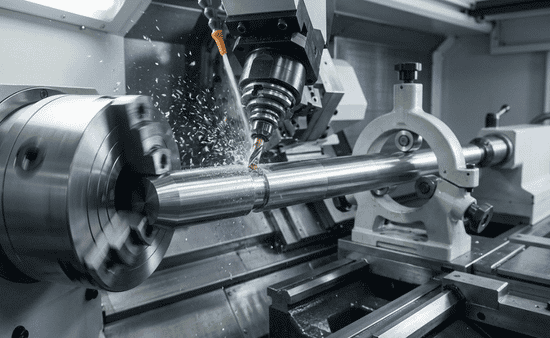
Manufacturing relies on exact measurements and flawless execution. When a single millimeter of deviation can compromise an entire system, engineers turn to highly controlled processes to ensure perfection. Precision turning stands out as a foundational technique in this environment. It is a machining process where a cutting tool moves linearly while the workpiece rotates, removing material to create precise cylindrical shapes.
Key Principles of Precision Turning
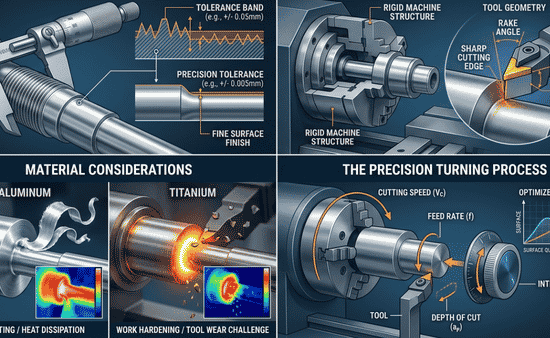
To appreciate how precision turning works, you need to understand the foundational elements that dictate its success.
Understanding Tolerances and Surface Finish
Tolerance refers to the allowable limit of variation in a physical dimension. Precision turning achieves incredibly tight tolerances, ensuring every part matches its exact design specifications. Surface finish is equally critical. A smooth finish reduces friction and wear, which is vital for moving mechanical parts.
The Role of Advanced Machinery and Tooling
You cannot achieve high precision with outdated equipment. The process relies on rigid, high-performance lathes and cutting tools designed to operate with absolute stability. The geometry of the cutting tool, the sharpness of the edge, and the machine’s ability to maintain a consistent speed all dictate the outcome.
Material Considerations
Different materials react uniquely to cutting forces. Aluminum cuts easily but can warp if it gets too hot. Titanium is highly durable but rapidly wears down cutting tools. Adjusting the cutting speed, feed rate, and tool material based on the specific workpiece is essential for maintaining high quality.
How Precision Turning Improves Component Quality
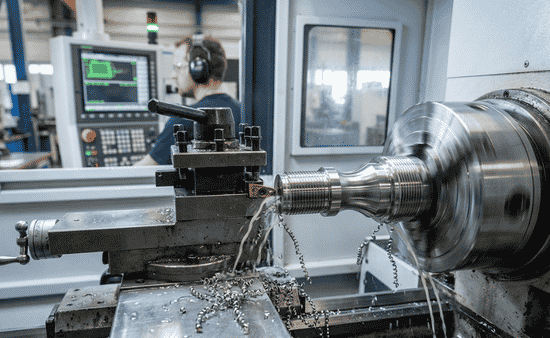
When implemented correctly, precision turning transforms raw metal or plastic into high-performance components. Here is exactly how it elevates the final product.
Dimensional Accuracy and Consistency
Computer-controlled turning machines follow programmed paths with microscopic accuracy. This eliminates human error and ensures that the first part produced is identical to the ten-thousandth part. This consistency is crucial for mass production and reliable assembly.
Superior Surface Finish and Integrity
Because the process uses optimized cutting speeds and sharp tooling, it leaves behind a near-perfect surface. This high surface integrity means the part is less susceptible to cracking, corrosion, or premature fatigue.
Enhanced Part Functionality and Lifespan
Components that fit together perfectly experience less vibration, friction, and stress. By achieving exact dimensions, precision turning ensures that gears mesh smoothly, bearings seat properly, and seals remain airtight, significantly extending the lifespan of the entire assembly.
Reduced Need for Secondary Operations
Historically, a turned part might require additional grinding or polishing to meet exact specifications. Modern precision turning achieves the necessary tolerance and finish in a single setup. This reduces production time, lowers costs, and minimizes the risk of mishandling the part during transfer between machines.
Technologies and Techniques in Precision Turning
The high quality associated with precision turning is a direct result of the advanced technology supporting it.
CNC Turning Centers
Computer Numerical Control (CNC) turning centers are the backbone of modern machine shops. These machines read digital blueprints and execute complex movements across multiple axes simultaneously. They offer unparalleled repeatability and speed.
Advanced Cutting Tools and Inserts
Tooling manufacturers continually develop new materials to handle demanding machining tasks. Carbide, ceramic, and diamond-coated inserts maintain their sharp edges at high temperatures, allowing for faster cutting speeds and cleaner finishes.
In-Process Measurement and Feedback Systems
Modern machines do not just cut material; they monitor their own work. Lasers and touch probes measure the part while it is still in the machine. If a tool starts to wear down, the system automatically adjusts the cutting path to compensate, ensuring the component remains within tolerance.
Specialized Support Equipment
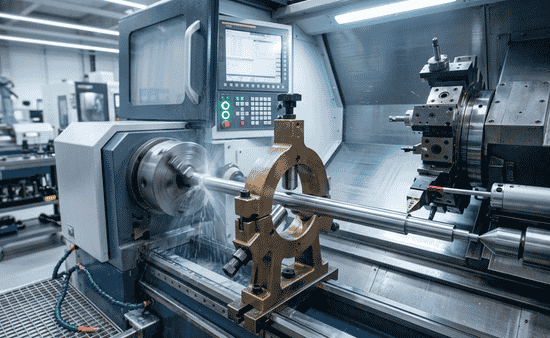
Creating long, slender parts presents a unique challenge, as the material can easily bend or vibrate under the pressure of the cutting tool. To solve this, machinists utilize a steady rest used for long shaft support during machining. This device clamps around the middle of the workpiece, keeping it perfectly aligned and preventing deflection.
Applications Across Industries
Precision turning is vital to any sector that requires durable, high-tolerance parts.
- Aerospace: Landing gear components, engine shafts, and custom fasteners require absolute reliability to ensure passenger safety.
- Medical: Surgical instruments, bone screws, and titanium joint implants depend on clean, precise cuts to function correctly within the human body.
- Automotive: Transmission shafts, brake components, and fuel injection systems need tight tolerances to improve vehicle efficiency and safety.
- Electronics: Connectors, conductive pins, and intricate housing components rely on micro-turning to fit into ever-shrinking devices.
Challenges and Solutions in Precision Turning
Despite its advancements, precision turning still faces hurdles. Overcoming material hardness is a common issue, especially when working with superalloys like Inconel. Machinists solve this by using ultra-hard ceramic cutting tools and optimizing their tool paths to minimize engagement time.
Managing heat and vibrations is another major obstacle. High-speed cutting generates immense heat, which can warp the part or destroy the tool. Advanced high-pressure coolants are directed precisely at the cutting edge to blast away heat and chips. Furthermore, utilizing heavy cast-iron machine bases and specialized tool holders absorbs vibrations, ensuring the machine remains incredibly stable throughout the process.
Conclusion
Precision turning is a cornerstone of modern manufacturing. By mastering tight tolerances, utilizing advanced CNC technology, and implementing strict quality controls, manufacturers can produce components that meet the rigorous demands of aerospace, medical, and automotive applications.