
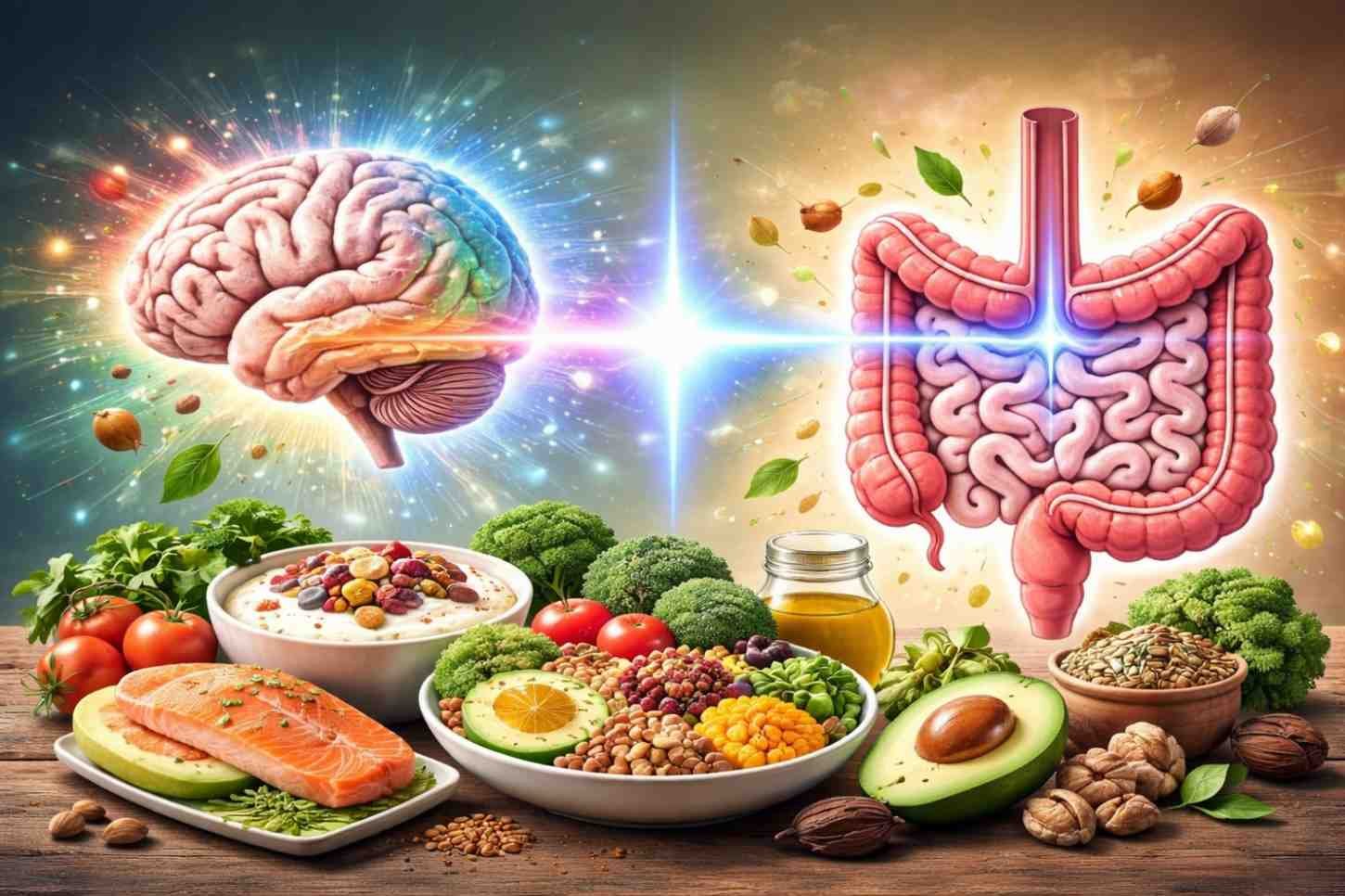
If you’ve ever felt “hangry,” irritated after a donut binge, or uplifted by a colorful salad, you’re experiencing a powerful reality: your diet directly impacts your mood. That’s not just feel‑good folklore — decades of research now links what you eat to cognition, emotional balance, energy stability, and even depression or anxiety risk.
In this blog, you’ll learn how food affects your brain, which nutrients matter most, how meal timing influences emotions, and easy diet habits that support stable mood and mental wellbeing.
The Science Behind Diet and Mood: How Food Talks to Your Brain
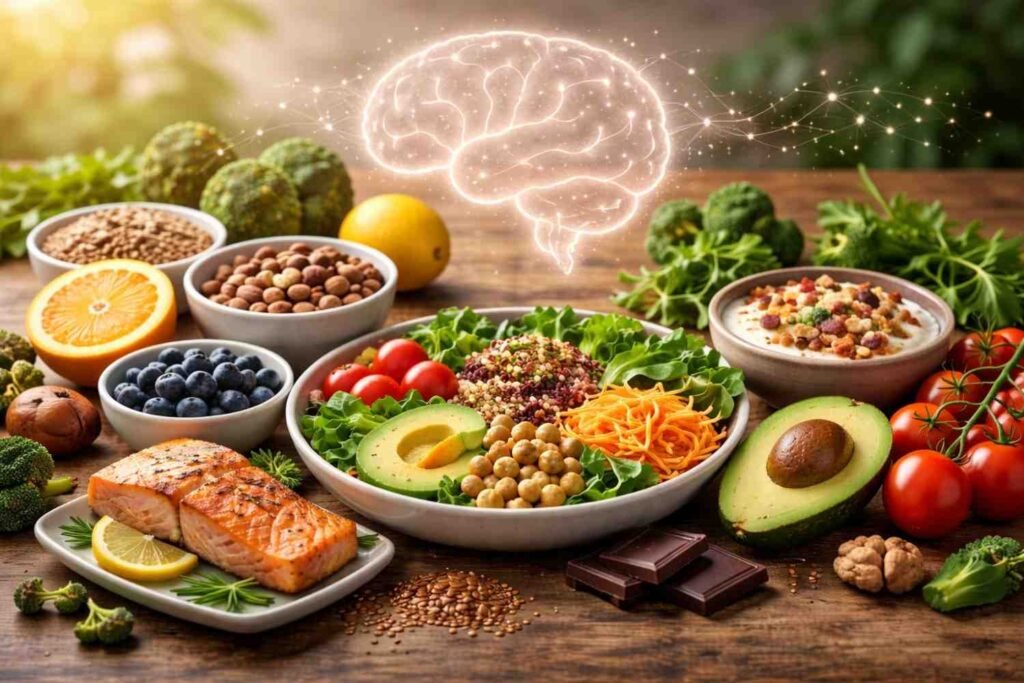
The Brain Needs Constant Fuel
Your brain is always “on.” It consumes about 20% of your energy intake even though it’s only 2% of body weight. The quality of that fuel — vitamins, minerals, antioxidants — determines how well your neurons function.
- High‑quality nutrients support brain structure and neurotransmission.
- Processed, sugary, ultra‑refined food increases inflammation and oxidative stress.
This isn’t just about energy — it’s about chemistry. Many brain chemicals that regulate mood — like serotonin, dopamine, GABA, and BDNF — rely on nutrients derived from your meals.
The Gut‑Brain Axis: The Real Highway Between Food and Feelings
One of the most exciting discoveries in nutritional science is the gut‑brain axis — a two‑way communication system between your digestive tract and your brain.
Here’s how it works:
- The gut houses trillions of microbes that produce neuroactive compounds.
- These microbes influence serotonin production, immune signaling, and stress hormones.
- Roughly 90% of your serotonin — a key mood regulator — is made in your gut.
A healthy microbiome supports emotional balance, while an imbalanced one (from junk food, sugar, or antibiotics) can promote anxiety, depression, and mood swings.
Key Nutrients That Influence Mood
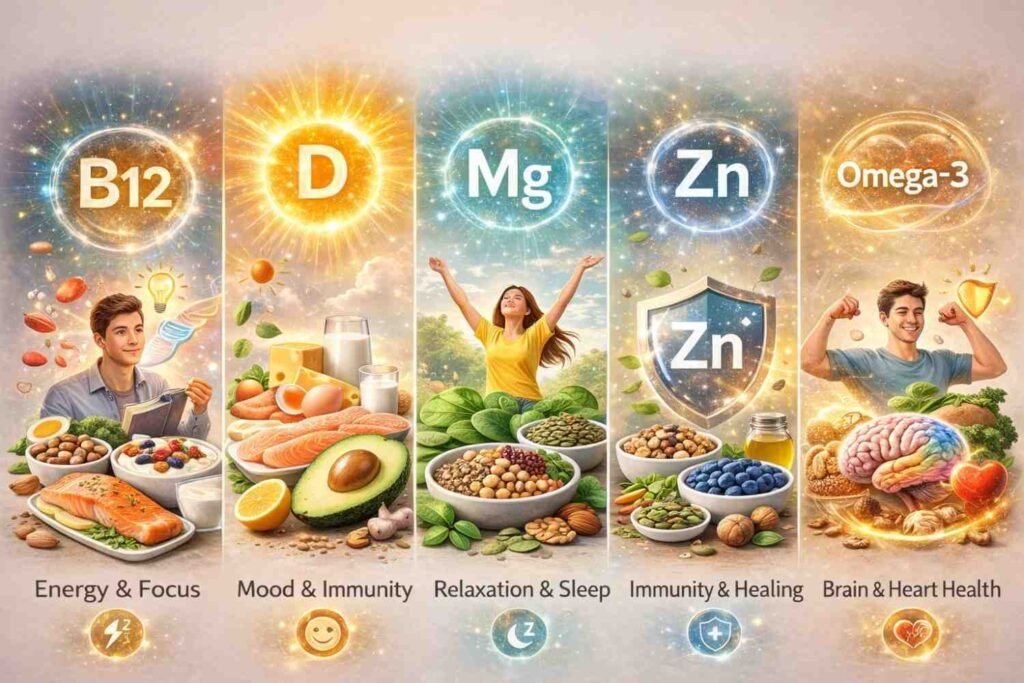
Omega‑3 Fatty Acids: Anti‑Inflammatory Mood Boosters
Found in salmon, sardines, walnuts, and flaxseed — omega‑3s help reduce brain inflammation and support neurotransmitter communication.
Studies associate higher omega‑3 intake with:
- Reduced depression symptoms
- Better stress resilience
Amino Acids: Building Blocks of Happiness
Amino acids from protein (meat, legumes, dairy) are precursors to serotonin, dopamine, and GABA — essential for stable mood and sleep.
Vitamins and Minerals That Matter
Multiple micronutrients contribute to emotional health, including:
- B vitamins (energy and neurotransmitter synthesis)
- Magnesium (calming the nervous system)
- Vitamin D (linked to lower depression risk)
- Zinc & iron (cognitive function)
Not getting enough of these can result in irritability, fatigue, and anxiety.
Dietary Patterns That Improve Mood

Mediterranean Diet: A Mental Health Powerhouse
Research repeatedly finds that people who follow a Mediterranean diet — rich in fruits, vegetables, legumes, whole grains, nuts, fish, and olive oil — generally experience lower rates of depression and anxiety.
Why it works:
✅ High in antioxidants and anti‑inflammatory fats
✅ Supports a diverse gut microbiome
✅ Improves blood sugar regulation
Whole Foods vs. Western Diet
A “Western” diet — heavy in processed food, refined sugars, and unhealthy fats — has been associated with:
- Chronic inflammation
- Mood disturbances
- Increased risk of depressive symptoms
Even moderate changes — like swapping soda for water and vegetables — can begin to shift mood and brain health.
How Everyday Eating Habits Shape Your Mood
Blood Sugar Balance Matters
Skipping meals or eating refined carbohydrates leads to sharp spikes and crashes in blood sugar. These rapid swings trigger:
- Irritability
- Fatigue
- Anxiety
- Sugar cravings
Staying nourished every 3–4 hours with balanced meals helps keep energy and emotions stable.
Fiber, Fermented Foods, and the Microbiome
Fiber feeds beneficial gut bacteria, while fermented foods like yogurt, kefir, and sauerkraut introduce probiotics. Both:
- Strengthen gut‑brain communication
- Support stable neurotransmitter production
- Reduce stress and anxiety tendencies
Mood‑Boosting Foods You Can Eat Every Day
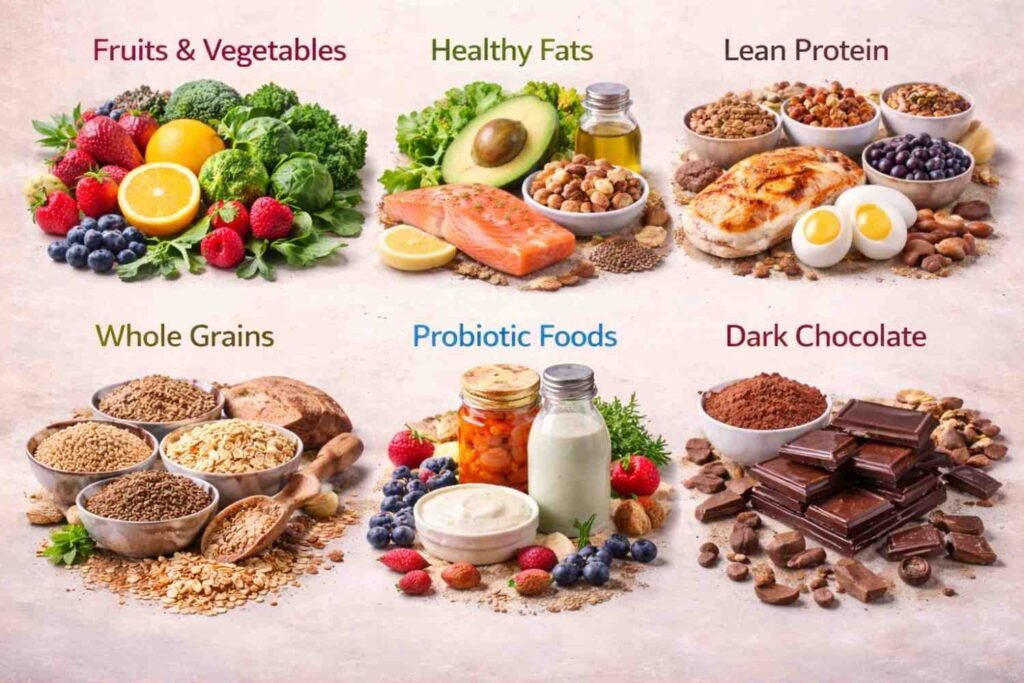
Here’s a practical list of nutrient‑rich foods that research shows support emotional health:
Fruits and Vegetables
- Berries, citrus fruits, leafy greens — rich in antioxidants that protect brain cells.
Healthy Fats
- Fatty fish, nuts, seeds — for omega‑3s.
Lean Protein
- Helps produce serotonin and dopamine.
Whole Grains
- Provide slow‑release energy and stabilize blood glucose.
Probiotic Foods
- Yogurt, kefir, kimchi — support gut microbiome health.
Dark Chocolate
- In moderation, cocoa polyphenols may help lower stress responses.
What to Avoid (or Limit) for Better Mood
Your diet can positively influence mood — but some foods can undermine it:
Ultra‑Processed Foods
High amounts of refined sugar, unhealthy fats, and artificial additives have been linked to increased risk of depression and anxiety.
Excess Sugar
Sugary beverages and sweets create inflammatory responses in the brain and contribute to mood instability.
Skipping Meals
Going too long without food triggers stress hormones like cortisol and adrenaline — leading to irritability and “hanger.”
Lifestyle Factors That Amplify Diet’s Impact
Diet doesn’t work in isolation. Other daily habits either help or hinder your emotional balance:
- Sleep quality: Poor sleep disrupts appetite regulation and cravings.
- Physical activity: Exercise boosts BDNF, improves mood, and enhances cognitive function.
- Hydration: Even mild dehydration can affect concentration and mood.
The key is a holistic approach — consistent healthy eating paired with good sleep, movement, and stress management fuels a resilient mind‑body system.
Frequently Asked Questions (FAQs)
1. Can diet change mood quickly?
Yes — blood sugar swings can influence mood within hours, while long‑term eating patterns shape sustained emotional wellbeing.
2. Does caffeine improve mood?
In moderate amounts, coffee and tea may elevate mood, but excess caffeine or sugary additives can increase anxiety and disrupt sleep.
3. Is emotional eating “bad”?
Emotional eating is a biological stress response. When you understand its triggers, you can shift toward healthier food choices that support mood without guilt.
4. Can changing diet help anxiety or depression?
While diet alone isn’t a replacement for professional treatment, healthier eating patterns are linked to lower risk and symptom severity of mood disorders.
Final Thoughts
Your diet is more than fuel — it’s a daily mood influencer. By prioritizing nutrient‑dense, whole foods, stabilizing blood sugar, nurturing your gut, and minimizing processed junk, you’re not just eating for your body anymore — you’re eating for your brain and emotional wellbeing too.
The science is clear: food affects how you feel. The good news? You have control over what goes on your plate — and in your mind.