Eating with the seasons isn’t just a trendy lifestyle choice — it’s a powerful way to nourish your body, protect your health, and support sustainable food practices. Americans are used to finding almost every fruit and vegetable on store shelves year-round. But choosing local, in-season produce offers significant health benefits that go far beyond taste.
You can make sure your diet is full of taste, nutrition, and antioxidants by matching the foods you choose with what is naturally available in your region. This eating pattern is more than just a fad; it’s a potent means of increasing vitality, strengthening immunity, and avoiding chronic illnesses.
I’ll go over the various advantages of seasonal eating, how it improves your health, and why you should adopt this way of life in this blog.
What Is Seasonal Eating and Why Does It Matter?
Seasonal eating refers to choosing fruits, vegetables, and other foods during the times of year when they’re naturally harvested in your region. It’s about prioritizing fresh, locally grown foods that are nourishing, flavorful, and packed with nutrients. This is a shift away from foods that have been stored for long periods or grown in artificial environments.

In the U.S., seasonal eating varies greatly by region, but the concept remains the same: eat what’s ripe at the moment to maximize health benefits and sustainability. This also ensures you’re getting foods at their peak freshness, which provides a natural boost to your health.
Seasonal Eating by Region in the U.S.
| Region | Spring | Summer | Fall | Winter |
| Northeast | Asparagus, Spinach, Radishes | Strawberries, Cherries, Corn | Apples, Squash, Pumpkins | Kale, Brussels Sprouts, Potatoes |
| Midwest | Peas, Lettuce, Rhubarb | Tomatoes, Cucumbers, Peppers | Apples, Squash, Sweet Potatoes | Root Vegetables, Carrots, Kale |
| South | Collard Greens, Mustard Greens | Watermelon, Berries, Peaches | Sweet Potatoes, Pumpkins | Citrus, Kale, Turnips |
| West (California) | Artichokes, Asparagus, Strawberries | Tomatoes, Peppers, Cherries | Apples, Pears, Squash | Citrus, Kale, Pomegranates |
| Pacific Northwest | Lettuce, Rhubarb, Radishes | Berries, Cherries, Peas | Apples, Pears, Squash | Winter Greens, Kale, Root Veggies |
| Southwest | Lettuce, Spinach, Broccoli | Melons, Peppers, Tomatoes | Squash, Apples, Pears | Root Vegetables, Kale, Citrus |
What Are the Key Benefits of Seasonal Eating?
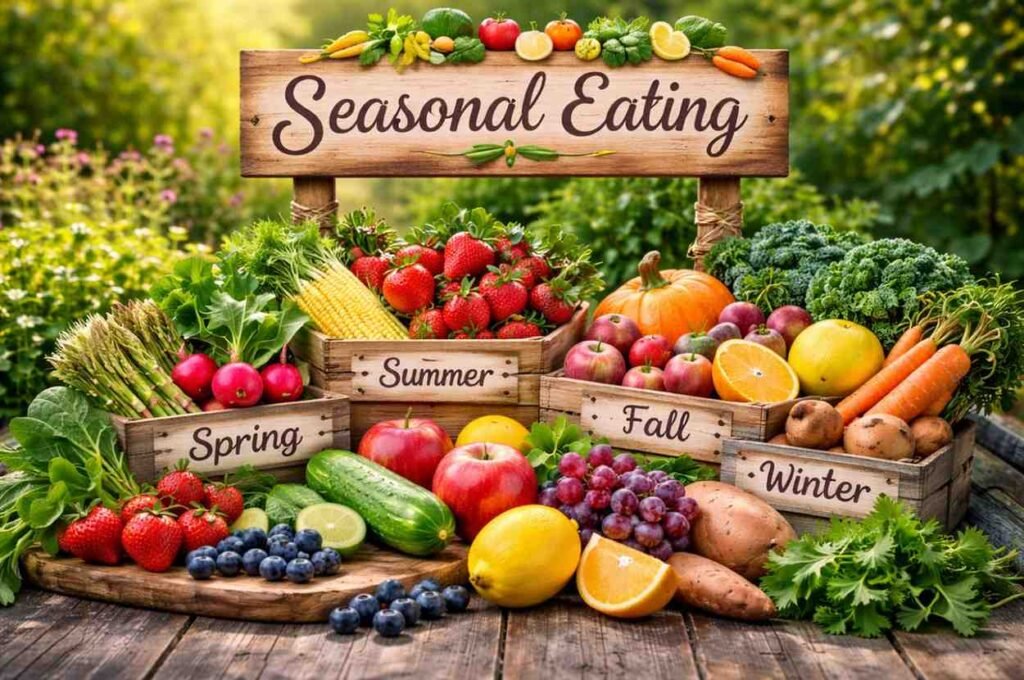
Seasonal eating offers numerous advantages to your health, from improved nutrition to better digestion. Let’s break down the primary benefits of incorporating this practice into your daily life:
1. Seasonal Produce Is More Nutritious
Produce that is harvested in season has a higher nutrient density compared to fruits and vegetables that are grown in greenhouses or transported over long distances. When foods are allowed to ripen naturally on the plant, they contain more vitamins, minerals, and antioxidants. These nutrients play a vital role in supporting immune health, cellular function, and overall well-being.
For instance, fruits like citrus in winter provide immune-boosting vitamin C, while berries in summer help protect your cells from oxidative stress. Choosing in-season produce ensures that you’re getting the best of what nature has to offer at its peak ripeness.
2. Supports Digestion and Gut Health
Seasonal eating encourages variety and dietary diversity, which helps maintain a healthy gut microbiome. The different types of fiber found in seasonal foods feed beneficial gut bacteria, which plays a critical role in digestion, immune response, and mood regulation.
A diverse microbiome also contributes to better weight management, blood sugar control, and reduced inflammation. Eating a wide range of seasonal produce ensures you’re getting plenty of fiber and plant compounds that help support optimal digestion and overall gut health.
3. Reduces Chronic Disease Risk
Consuming a variety of fruits and vegetables from different seasons helps lower your risk of chronic conditions such as heart disease, type 2 diabetes, and certain cancers. The antioxidants and phytochemicals found in in-season produce help fight free radicals, reduce inflammation, and improve cellular health.
For example:
- Tomatoes in the summer are rich in lycopene, a powerful antioxidant linked to reduced risks of prostate cancer.
- Sweet potatoes in the fall are packed with beta-carotene, which supports eye health and immune function.
This dietary diversity is essential for chronic disease prevention and long-term health.
Seasonal Breakdown of Benefits
| Season | Key Produce | Targeted Health Impact |
| Spring | Asparagus, Spinach, Radishes | Detoxification: Promotes liver health and helps “restart” metabolism after winter months. |
| Summer | Berries, Tomatoes, Zucchini | Hydration & Skin Health: Packed with antioxidants, these foods fight oxidative stress and support glowing skin. |
| Fall | Squash, Apples, Sweet Potatoes | Grounding & Sustenance: Rich in fiber and slower-digesting carbs, they provide energy during cooler weather. |
| Winter | Kale, Citrus, Root Vegetables | Immunity & Nourishment: Packed with vitamins and minerals, these foods stabilize energy and support immune function in colder months. |
How Seasonal Eating Supports Your Health Year-Round
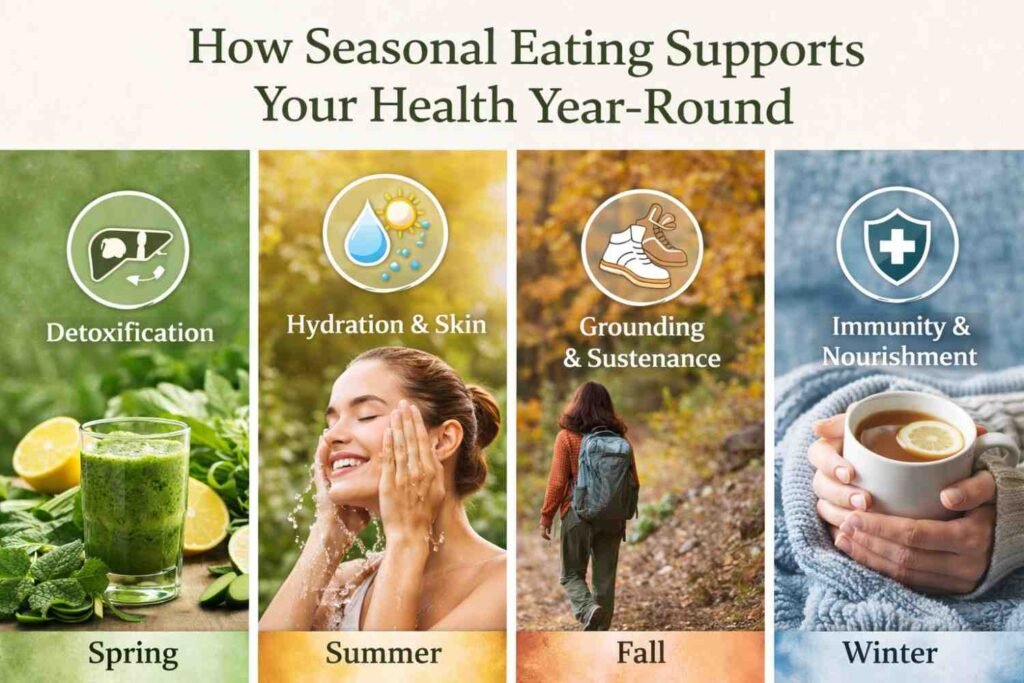
While seasonal eating may seem like an obvious health trend, the reality is that it supports your health in various ways, both physically and mentally. Here’s a deeper look at how eating seasonally benefits your body and mind:
4. Encourages a More Sustainable Diet
Eating seasonally helps reduce food waste and your carbon footprint. Since seasonal produce is grown closer to home, it doesn’t require long-distance transportation, reducing energy consumption and environmental impact. By choosing local, in-season produce, you’re not just supporting your health, but also contributing to a more sustainable food system.
5. Better Taste and Satisfaction
Seasonal produce is fresher and tastier than out-of-season options, which can often be bland and less flavorful due to long shipping times. The vibrant taste of seasonal fruits and vegetables makes eating healthy more enjoyable and encourages you to stick to your healthy eating habits throughout the year. Fresh, flavorful meals help you feel more satisfied, which can reduce cravings for processed, less nutritious foods.
Frequently Asked Questions (FAQs)
1. What counts as “seasonal” produce in the U.S.?
Seasonal produce refers to foods harvested at peak ripeness in your geographic region. Common examples include strawberries in spring, tomatoes in summer, squash and apples in fall, and citrus in winter.
2. Can I still eat healthy foods that aren’t in season?
Yes. Frozen and canned fruits and vegetables are good alternatives when fresh seasonal options aren’t available. These products are usually frozen or canned at their peak ripeness, preserving their nutrients.
3. Does seasonal eating cost more?
In many cases, eating seasonal produce actually costs less because local, in-season foods are abundant and don’t require extensive transportation or long-term storage.
4. Can seasonal eating really improve my health?
Yes. Seasonal eating provides more nutrients, greater flavor, and supports better digestive health. By eating in-season produce, you’re getting foods that are fresher and more nutrient-dense, helping you maintain a healthy, balanced diet.
Conclusion: Why You Should Embrace Seasonal Eating
Incorporating seasonal eating into your lifestyle offers numerous health benefits — from boosting your immune system in winter to helping you maintain energy during the colder months. The act of eating with the seasons supports not only better digestion, reduced chronic disease risk, and improved nutrition, but also encourages a more sustainable and enjoyable diet.
By embracing local, in-season produce, you connect with nature’s cycles, enhance your health, and support a healthier planet. This approach is simple, practical, and nourishing — and it’s never been easier to get started with local farmers markets, grocery stores, or community-supported agriculture (CSA) programs.
Seasonal eating isn’t just a health trend; it’s an investment in your long-term health and well-being.