
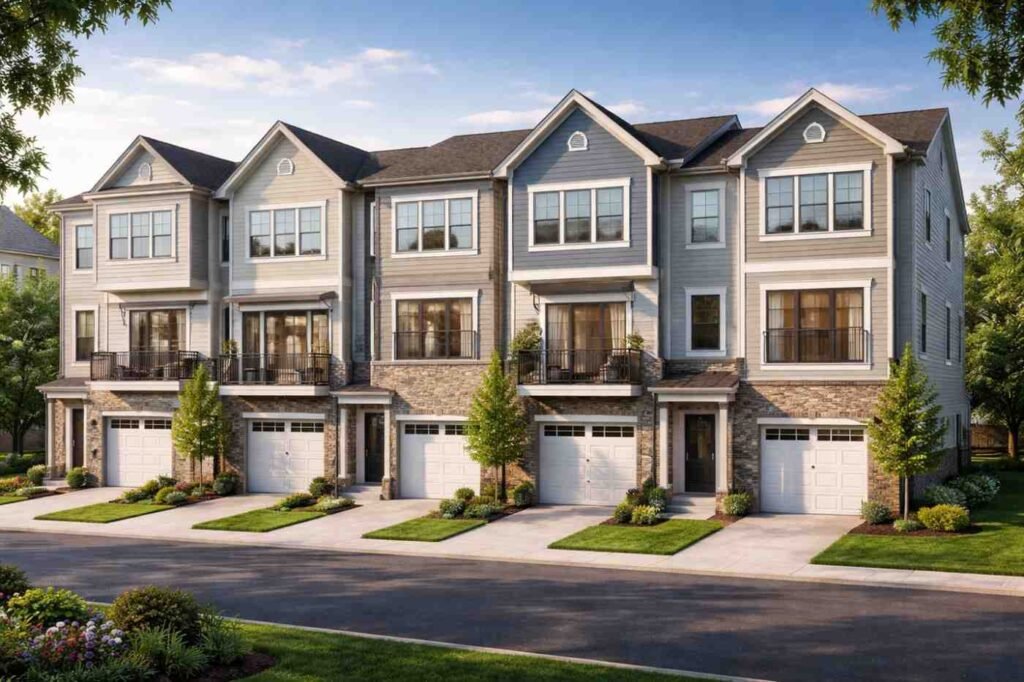
Housing preferences shift constantly as demographics and economic conditions change. People want homes that offer privacy and convenience without the heavy maintenance of large detached properties. Townhouses fill this gap perfectly. They provide multiple floors of living space while sharing side walls with neighbors.
This style of architecture has existed for centuries, but contemporary building practices have transformed it entirely. This guide explores how builders construct these modern homes and why they are becoming a dominant force in residential development.
The Growing Appeal of Connected Housing
Efficient Use of Space
Developers must maximize available land as urban and suburban populations grow. Townhouses allow builders to place more units on a single acre than traditional single family homes. This density reduces land costs per unit. Homeowners benefit from lower purchase prices while still enjoying private entrances, attached garages, and small patios.
The vertical design creates distinct zones for living and sleeping. Main floors typically feature open concept kitchens and living rooms, while upper levels house the bedrooms. This separation provides a functional flow that rivals much larger standalone houses.
Community and Shared Amenities
Connected housing fosters a strong sense of community. Residents live close to one another, encouraging neighborhood interaction and mutual support. Builders often include shared spaces like parks, walking trails, and community centers in their site plans to enhance the living experience.
Homeowners’ associations typically handle exterior maintenance, including roof repairs, landscaping, and snow removal. This setup appeals to busy professionals, frequent travelers, and retirees who prefer to spend their weekends relaxing instead of doing yard work.
Modern Building Techniques and Materials
Sustainable Foundations
Constructing a block of townhomes requires careful planning and coordination. Builders often pour a single, continuous concrete foundation for multiple units at once. This approach saves time, reduces labor costs, and minimizes material waste compared to pouring separate slabs for individual houses.
Modern projects utilize advanced framing techniques to optimize lumber usage and increase structural integrity. Insulation technology has also improved dramatically over the past decade. Spray foam and rigid foam boards seal gaps perfectly.
Better insulation lowers monthly energy bills and keeps the interior climate comfortable year-round, regardless of the weather outside. These materials that elevate modern home design play a crucial role in creating not just functional but energy-efficient and comfortable living spaces.
Soundproofing Innovations
Sharing walls used to mean hearing your neighbors watch television or walk up the stairs. Today, stringent building codes and high buyer expectations demand superior acoustic separation. Construction crews install double-stud walls with an air gap between adjoining units.
They pack these gaps with specialized sound-dampening insulation materials. Builders also utilize resilient channels, which are metal brackets that decouple the drywall from the framing. This prevents sound vibrations from traveling through the wood. These deliberate improvements make modern attached homes just as quiet and private as completely detached houses.
Planning and Zoning Considerations
Navigating Local Regulations
Before moving any dirt, developers must secure comprehensive approval from city planners. Zoning laws dictate how tall buildings can be, the required distance from the street, and how many parking spots each unit needs. Builders conduct extensive traffic studies and environmental assessments to ensure the project benefits the local area without causing congestion.
For instance, those looking into the new construction of townhomes in Salem UT will find that local guidelines strictly regulate aesthetic design and infrastructure impact. Strict zoning ensures that new developments integrate smoothly into existing neighborhoods and provide adequate utility connections for all future residents.
The Future of Residential Development
The demand for affordable, high-quality housing will only increase as land becomes scarcer. Builders continue to refine their methods to meet this pressing need. Prefabricated components are becoming increasingly common on residential job sites. Factories build wall panels, floor systems, and roof trusses off site in controlled environments. Trucks ship these finished pieces to the location for rapid assembly. This method drastically reduces weather related delays and improves overall quality control.
Townhouse designs are also evolving to match modern lifestyles. Floor plans now feature dedicated home office spaces, mudrooms, and oversized windows to maximize natural light. Rooftop decks provide private outdoor entertaining areas without requiring large ground level yards. Smart home technology comes standard in many new builds. Builders pre wire units for high speed internet and install smart thermostats, automated lighting, and keyless entry systems.
Townhouses offer a highly practical solution to modern housing challenges. They combine the financial benefits of homeownership with the convenience of low maintenance living. Advancements in construction methods ensure these homes are quiet, energy efficient, and structurally sound.
As builders continue to innovate with better materials and smarter designs, connected housing will remain a top choice for buyers across the country. Evaluating your budget, desired location, and lifestyle needs will help you decide if this type of residential property is the right fit for your next move.